CORSICA linea takes delivery of its second new LNG-powered vessel, CAPU ROSSU
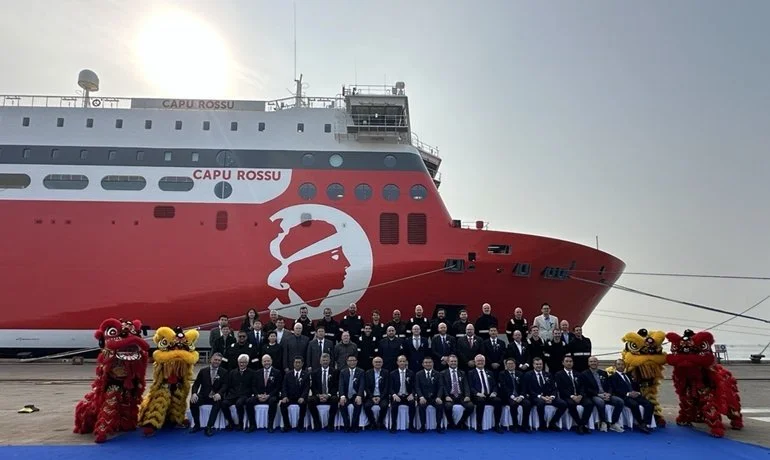
On March 26, 2026, China Merchants Industry Weihai Shipyard delivered the 12th Stena E-Flexer Series ship to Stena RoRo. The vessel, named Capu Rossu, will travel between Marseille and Corsica under Corsica Linea's operation. Over the course of 10 years of cooperation with CMI Weihai Shipyard, Stena RoRo has placed 19 orders, including 15 Stena E-Flexers, two NewMax RoRo ships, and two C-Flexers.
Since 2019, together with R&M MIT we have delivered 18 RoPax/ferry projects for multiple shipyards and shipowners as the interior turnkey solution project provider.
The delivery of CAPU ROSSU, Corsica Linea’s latest LNG-powered RoPax ferry, represents more than just a fleet expansion—it sets new standards in sustainable shipbuilding, passenger comfort, and onboard catering infrastructure. This vessel is named after an iconic red granite headland that majestically overlooks the Gulf of Porto, in the heart of the Calanche de Piana in Corsica. By naming it Capu Rossu, CORSICA linea pays tribute to the island’s strength, untamed beauty, and profound spirit.
LNG Propulsion Driving the Future of Maritime Catering
The vessel is central to the company’s strategy to achieve a 40% reduction in CO₂ emissions by 2030, while supporting the creation of a low-carbon transport corridor between mainland France and Corsica.
For onboard operations, including galley systems, LNG-powered vessels bring important implications:
Improved energy efficiency and power management
Reduced heat loads and emissions impact on HVAC systems
Increasing demand for energy-efficient galley equipment
This transition is driving innovation across the entire onboard ecosystem—including professional kitchens.
Vessel Specifications Supporting High-Capacity Catering
CAPU ROSSU is designed to handle both passenger and freight demand efficiently, combining high capacity with operational flexibility:
Length: ~203 m
Passenger capacity: approx. 1,000–1,035
Cabins: 234–235 units
Speed: up to 23 knots
Garage capacity: extensive trailer and vehicle space
For catering design, these figures translate into:
High-volume meal production requirements
Continuous service cycles (day and night crossings)
Need for robust, marine-grade galley equipment
Onboard Catering: High-Volume, Multi-Concept Food Service
CAPU ROSSU incorporates a multi-outlet food service concept, reflecting modern passenger expectations:
Main restaurant (~300+ seats)
Snack bar (~250 seats)
Central bar (~300+ seats)
Additionally, a large passenger base and multiple seating areas require optimized galley workflow and service logistics.
Key Galley Design Considerations
Based on the vessel’s layout and capacity, onboard catering likely includes:
1. Central Production Kitchens
The main galley must support:
High-volume cooking
Batch production and regeneration systems
Efficient plating and dispatch to multiple outlets
2. Satellite Service Points
Snack and bar areas require:
Compact preparation stations
Fast-service equipment (grills, fryers, beverage systems)
Seamless integration with central galley supply
3. Cold Storage & Logistics
With crossings between Marseille and Corsica:
Significant cold and frozen storage capacity
Optimized provisioning cycles
Compliance with maritime hygiene standards
Passenger Comfort Meets Galley Efficiency
CAPU ROSSU has been designed to deliver a high-quality onboard experience, which depends heavily on the performance of the galley infrastructure.
Passengers benefit from:
A spacious restaurant at the front of the vessel
A snack/bar for quick dining options
Comfortable social spaces designed for relaxation
Behind the scenes, this requires:
Reliable, continuous-operation equipment
Reduced downtime and maintenance-friendly installations
Efficient ventilation and extraction systems adapted to LNG vessel design
Energy-Efficient Galley Solutions on LNG Vessels
With CAPU ROSSU reflecting a new generation of low-emission ships, galley systems must align with sustainability goals:
Key Trends in Marine Galley Equipment:
Transition to induction cooking systems
Use of heat recovery systems
High-efficiency dish washing
These innovations support the vessel’s broader environmental performance while maintaining high service standards.
A Model for Future Ferry Projects
As part of Corsica Linea’s ongoing fleet modernization, CAPU ROSSU builds on the success of earlier LNG vessels and reinforces the shift toward sustainable maritime operations.
We believe that:
Catering is becoming a strategic design element, not just a support function
Energy efficiency requirements are reshaping equipment selection
Passenger expectations are driving multi-concept food service offerings
CAPU ROSSU demonstrates that modern ferry design is no longer just about transport—it is about delivering a complete onboard experience.
For marine galley specialists, this vessel is a clear example of how:
High-capacity operations
Sustainability targets
Passenger-focused design
must be combined into a single, efficient solution.